

The next G7 Summit will be held in Évian-les-Bains from 15 to 17 June 2026, bringing together heads of state and government from the G7 nations: Canada, France, Germany, Italy, Japan, the United Kingdom and the United States.
France holds the presidency of the group for 2026 and President Macron of France announced in of June 2025 - at the last summit in Kananaskis, Alberta, Canada - that the event would be held in Évian, France.
Whilst the summit is a major international political event, for many people living and working in Geneva and the wider cross-border region, its impact will be felt less with regards to the diplomatic headlines and more in terms of everyday logistics: commuting times, border controls, police presence and security measures.
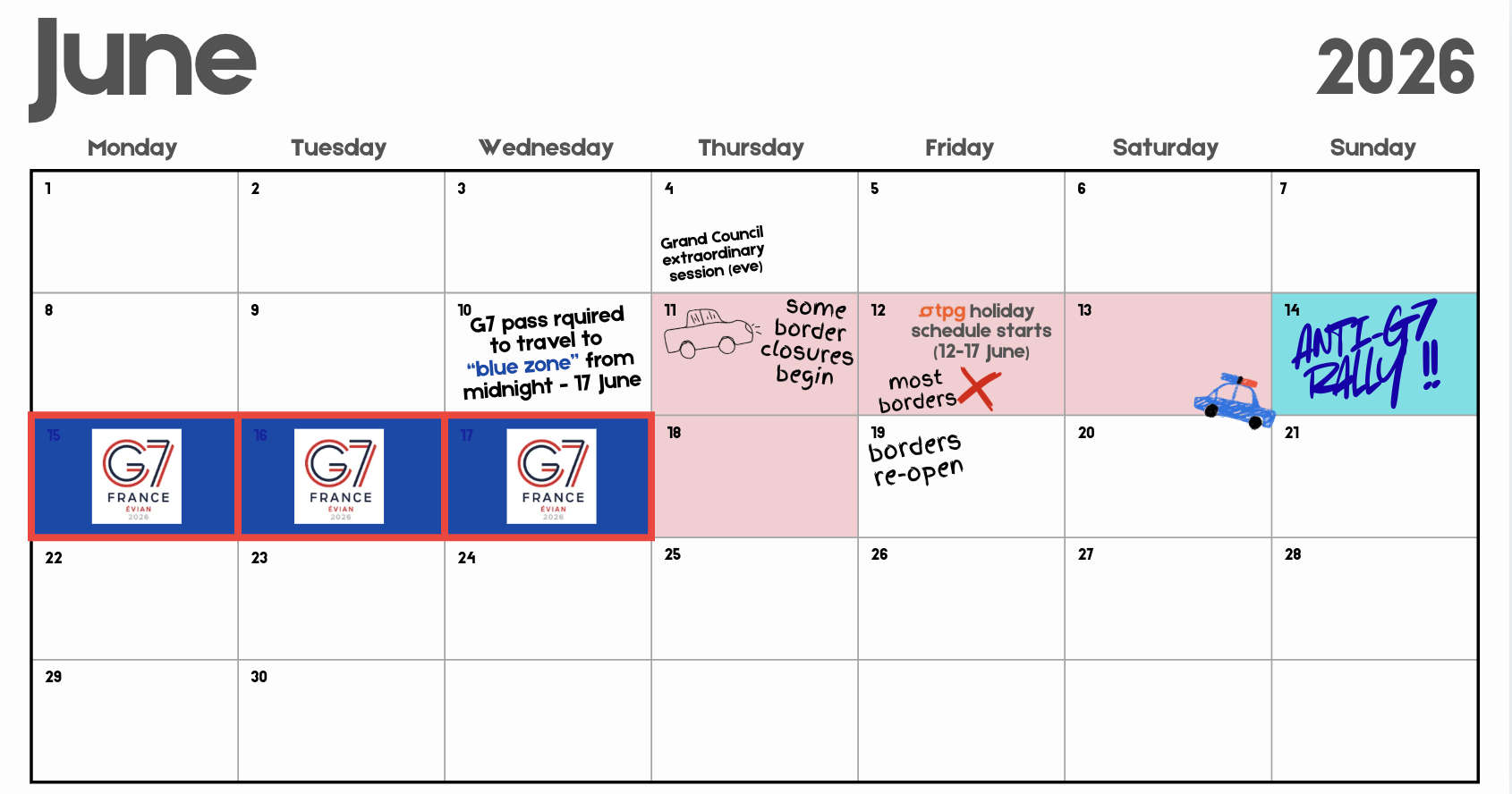
From 10 to 19 June 2026, Switzerland will temporarily reinforce border controls with France as part of coordinated security measures linked to the summit. The Swiss Federal Council approved this step at the request of Geneva authorities, who are preparing for a large-scale security operation as well as anti-G7 demonstrations.
Here's what you need to know:
The "blue zone" and the "red zone"
One of the most significant measures will affect people travelling into the immediate Évian area. French authorities have introduced a mandatory authorisation system for access to a designated security perimeter known as the "blue zone", covering at least the municipalities of Évian-les-Bains, Neuvecelle and Publier in France. Access to this zone will require a personal QR code known as a PASS G7. The pass is free of charge but must be obtained in advance through the official application platform (link: pass-g7.gouv.fr). Cross-border workers whose jobs require them to enter the zone will need a valid PASS G7 from 11 June at 00:00 until 17 June at 20:00, meaning the restrictions begin several days before the summit officially opens.
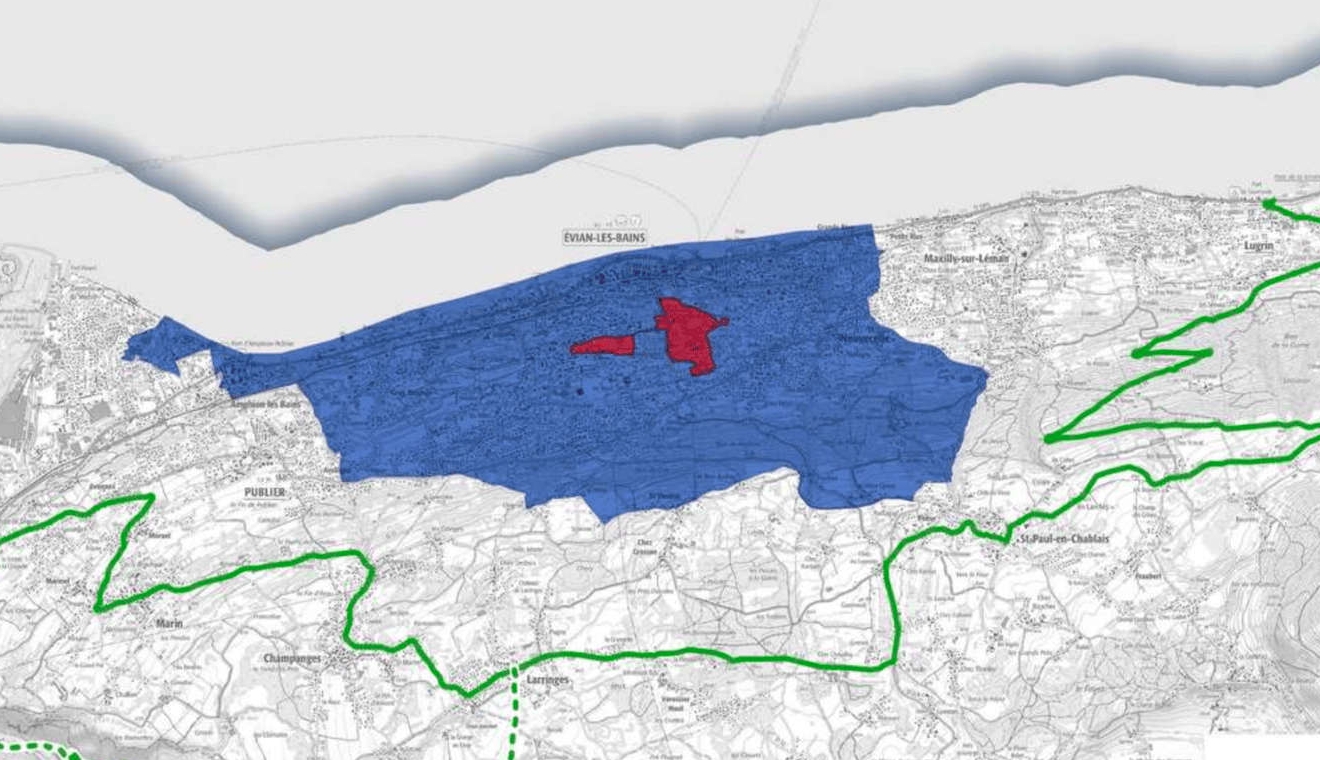
Image credit: https://www.haute-savoie.gouv.fr/Actualites/Espace-presse/G7/Zones-rouge-et-bleue
The red zone is the innermost, highest-security area of the 2026 G7 Summit in Évian. It covers the summit venues themselves and their immediate surroundings, centred on the Évian Resort area where leaders and delegations will be staying and meeting. Access is heavily restricted and is generally reserved for official delegations, accredited personnel, residents, essential workers, and others with a justified need to enter.
What about commuting from elsewhere in France to Geneva?
Only seven of Geneva's 35 border crossings will remain open during the summit period. As a result, significant delays are expected at the remaining crossings as traffic is funnelled through a much smaller number of access points and subjected to additional security checks.
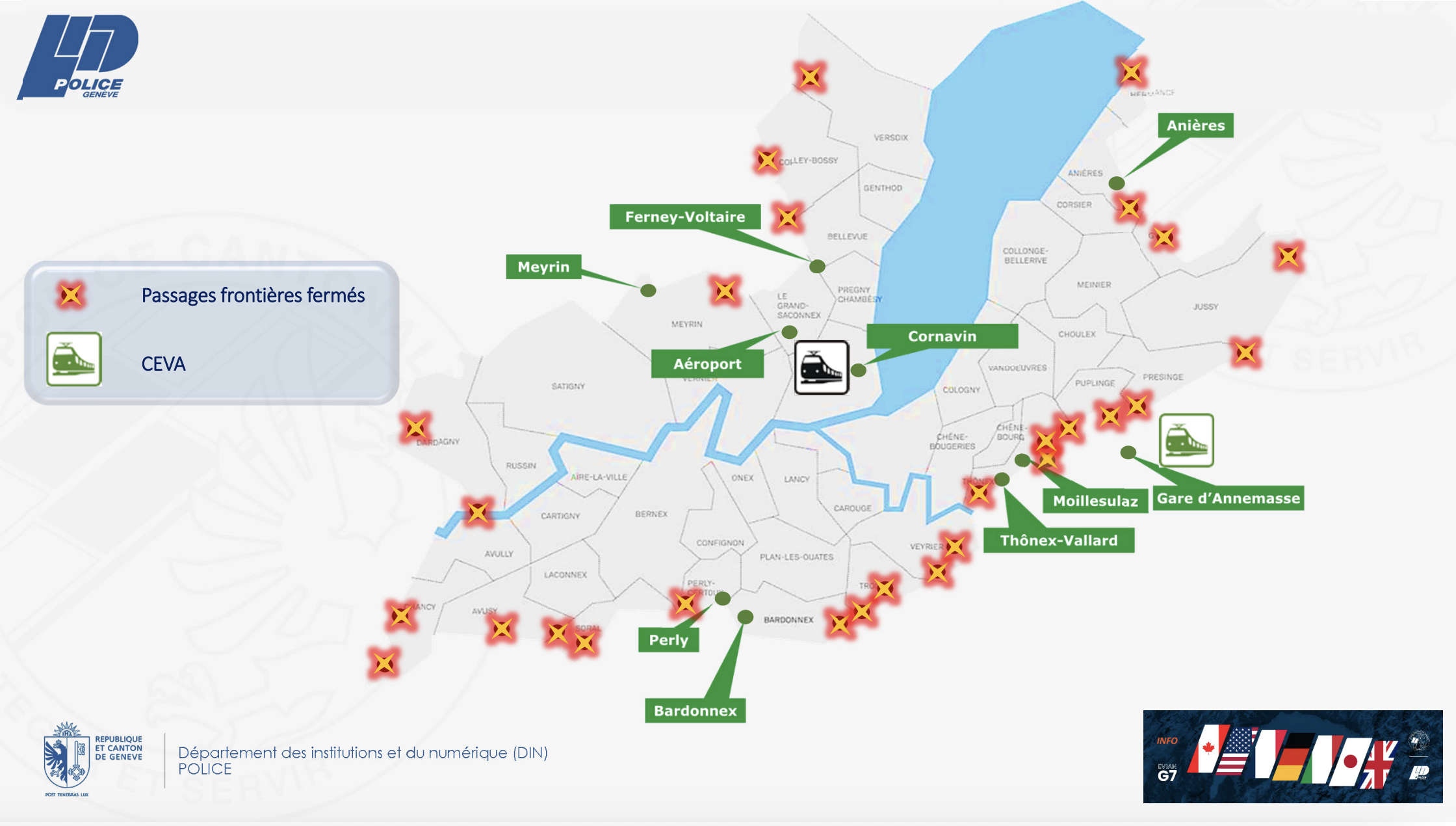
Image credit: https://www.ge.ch/document/g7-carte-passages-frontieres-fermes
A1 autoroute closure : The A1 stretch between the Meyrin junction and Bardonnex border will close in the southbound direction between 00:01 on Monday 15 June - 23:59 on Wednesday 17 June, diverting all traffic off the autoroute at Meyrin. This will also include the closure of the moto southbound entrances and exits at Bernex, Perly/Plan-les-Ouates and the A1a slip road from La Praille towards Bardonnex.
From France, there are no lane closures expected, with both traffic lanes remaining open.
The A1 motorway exit at Vengeron road split towards Geneve-Lac will also be closed on Sunday 14 June only (the date of the anti G7 rally) from 06:00 - 23:59.
Routine journeys : Journeys between France and Switzerland are likely to take considerably longer than usual. Anyone travelling regularly for work, school, appointments or other commitments should allow extra time, carry valid identification documents and check traffic conditions before setting off.
For the latest information, drivers can consult the TCS website for real-time traffic updates. WRS will also provide live traffic reports throughout the Breakfast Show, every weekday from 06:30 to 10:00. LISTEN LIVE.
For those requiring customs, three secondary customs posts will be available during designated periods to ensure smooth flow of travel for specific permit holders. Opening times of those customs will be 06:00 - 09:30 and 15:30 - 19:00 between 12-18 June. More info here.
I travel regularly to France for shopping or leisure. Should I change my plans?
The border is not closing completely, however, every additional control point creates the possibility of queues. A routine trip to a shopping centre, restaurant or hiking destination in France may simply take significantly longer than expected. It is recommended that you limit non-essential trips and factor in extra time on both the outbound and return journeys.
Will public transport be affected?
Yes. Public transport services are expected to continue operating throughout the summit period, but there are modifications to the usual timetable.
Transports publics genevois (TPG) announced that certain cross-border services will be adapted between 12 and 17 June. Passengers travelling on routes serving affected border areas should consult the latest service information before travelling, as schedules and stopping patterns may change at short notice.
The holiday timetable will be in effect across the entire network from 15-17 June (inclusive) except for school bus routes which will operate according to the normal timetable. Cross-border routes 60, 61 and 80 will run according to their normal schedule.
The line 29 will not be running on 12-14 June.
The TPG app will have up-to-date information over the coming days. 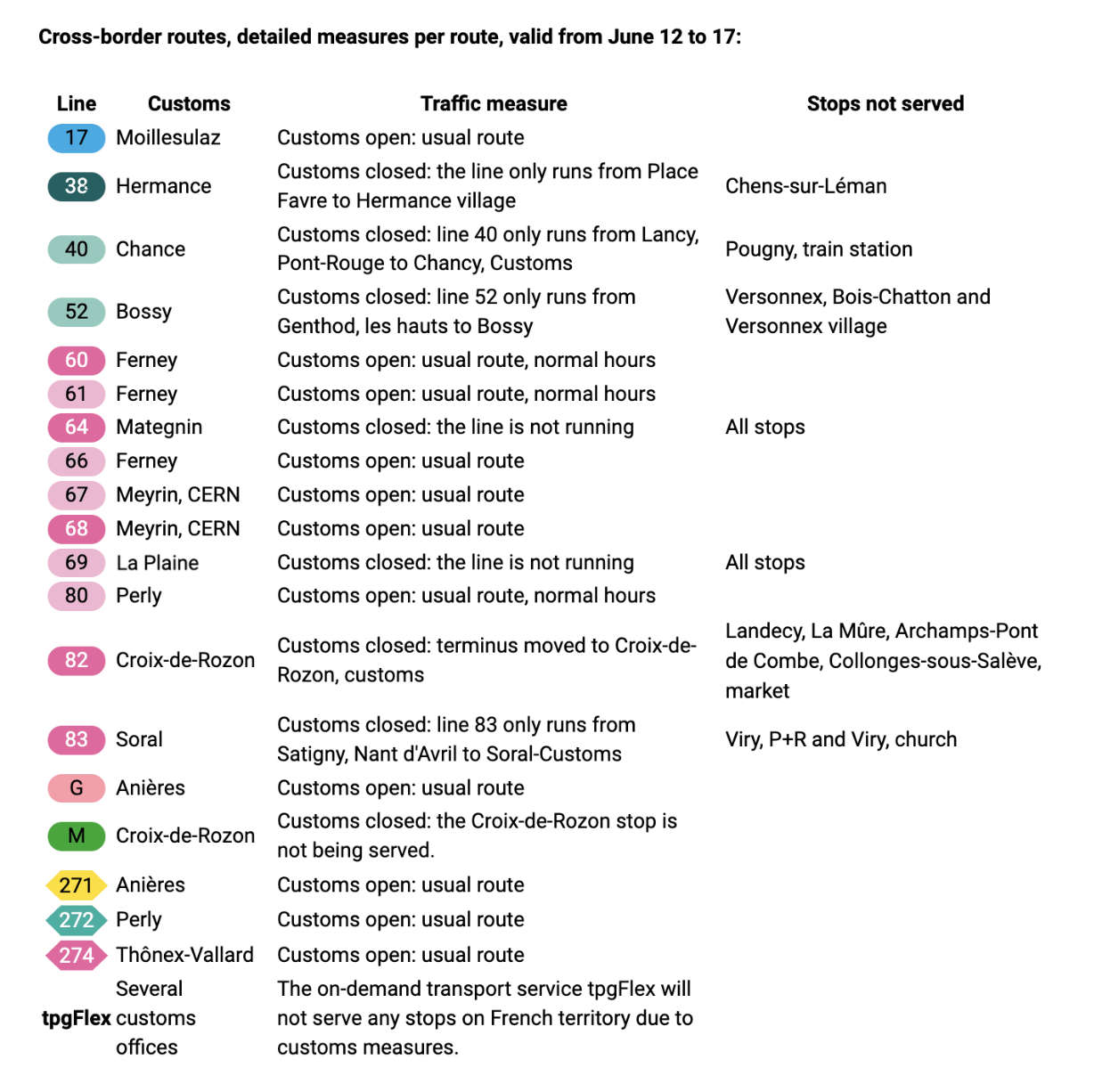 Source: www.tpg.ch/fr/evenements-et-chantiers-exceptionnels
Lake transport will also be affected. Between 11 and 17 June, the CGN's N1 ferry service between Lausanne-Ouchy and Évian will be rerouted to Lugrin-Tourronde, several kilometres east of Évian. Shuttle buses will then transport passengers to their final destination. Additional security personnel are expected to be present both on board vessels and at landing points throughout the summit.
As with many aspects of the security operation, transport arrangements remain subject to operational requirements and passengers are advised to always check for updates before travelling.
For train transport, it is recommended to check the official SBB website before travel.
Air travel through Geneva Airport
Geneva Airport will adapt its operations for the G7 summit between 13-19 June. Commercial flights will be maintained, but disruptions are expected on access routes to the airport and the surrounding region. The airport urge travellers to check flights before starting their journey to the airport and prioritising public transport where possible. A dedicated website for the Geneva Airport G7 updates has been set up for practical information.
'No-G7' demonstration on Sunday 14 June
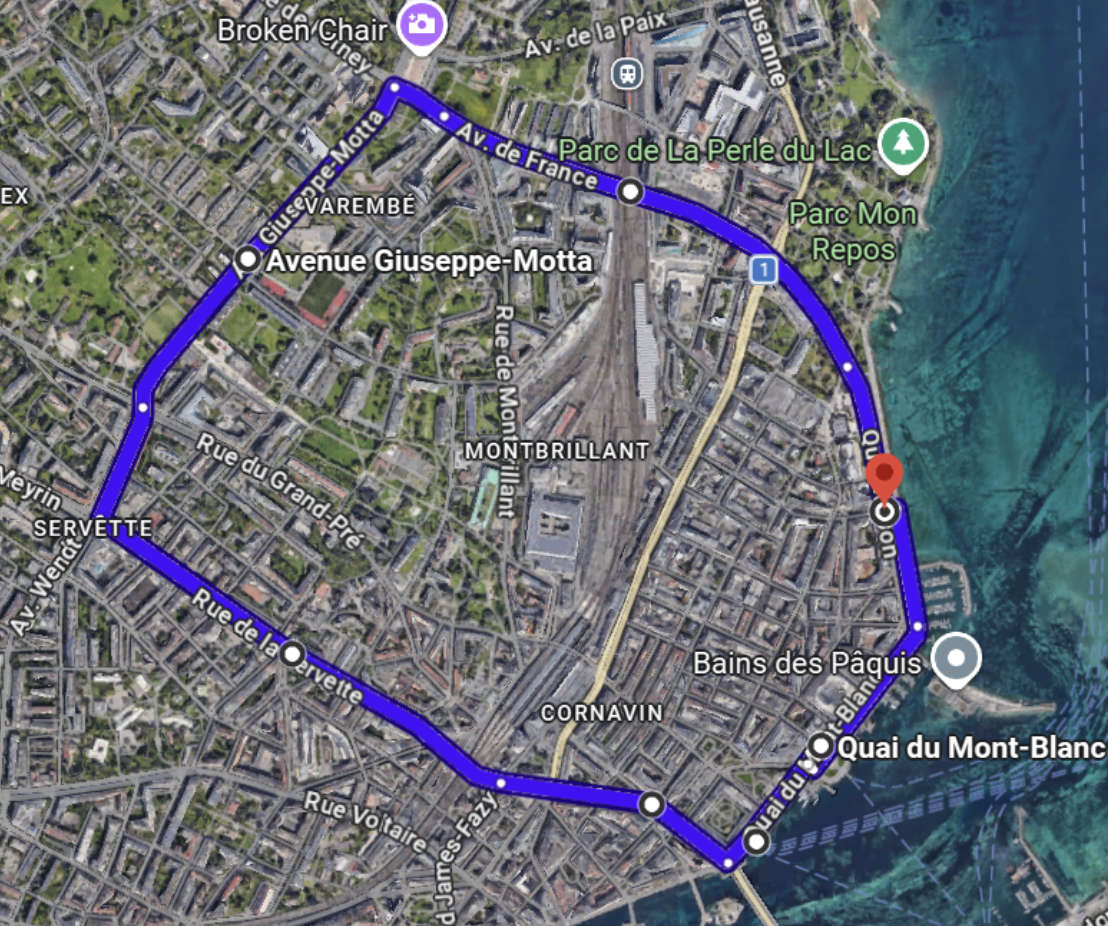
Geneva has authorised a major anti-G7 demonstration scheduled for Sunday 14 June, starting at 16:00. Current planning assumptions suggest attendance could range between 10,000 and 20,000 participants, although authorities have reportedly considered higher turnout scenarios of up to 50'000 as part of their contingency planning.
The demonstration will take place entirely on the right bank of Geneva. The route itself has been the subject of lengthy discussions between organisers and local authorities. One of the main points of disagreement concerned access to the Mont-Blanc bridge, which officials declined to authorise due to concerns over the bridge's structural limitations, crowd management and potential confrontations. Organisers have since accepted the proposed route, although further adjustments remain possible.
Most demonstrations linked to international summits are peaceful. However, large gatherings of this nature often attract activist groups from across Europe, and authorities are preparing for a range of possible scenarios.
Police resources will be deployed throughout the event and will remain in place until crowds have dispersed.
Aside from the protest, will I notice anything in Geneva itself?
Almost certainly. Even residents with no plans to visit protest areas should expect a much more visible security presence than usual. Geneva is coordinating the Swiss side of the operation in close cooperation with French authorities and the Confederation, and the deployment is expected to involve both police forces and the Swiss Army.
That does not necessarily mean widespread disruption. However, residents should be prepared for temporary security perimeters, occasional road closures, traffic diversions and a greater concentration of uniformed personnel throughout the canton.
The scale of the operation is reflected in the preparations already underway. Geneva has negotiated special arrangements regarding overtime and compensation for officers working during the summit period, highlighting the extent of the resources being mobilised.
Previous international summits have caused disruption beyond the immediate event area. During the 2003 G8 Summit in Évian, significant traffic impacts were felt not only around Geneva but also on routes between Geneva and Lausanne. Authorities have not ruled out similar congestion this time, although the extent of any disruption will depend on security requirements and protest activity during the event itself.
What is the one thing I should do?
Build extra time into any journey between 10 and 19 June. And carry ID.
Whether you're commuting from France, catching a flight, attending a meeting or simply driving across the canton, the safest assumption is that travel will be slower and less predictable than normal. For most residents, the G7 won't mean checkpoints on every corner or major disruption to daily life. But it will mean tighter security, more police and a higher chance of delays - especially near the border.
Any questions?
If you have questions about the G7 summit, you can call the hotline on 0800 902 456 (open 11:00 - 19:00 from 8 June) for any questions related to the event, including security arrangements, mobility, access to different sectors and impact on daily life in the canton. Furthermore, Geneva police have opened up a separate phone line to answer general questions - 058 467 15 15, hoping to ease pressure from the emergency police hotline, 117.
For Vaud specific enquiries, you can write to info.police@vd.ch for information.
This article reflects the information available at the time of publication, with links to official sources wherever possible so readers can access the latest updates directly. If you notice any information that has changed, become outdated, or links are broken, please let us know via our contact us page.
Share your experience
Tell us how the G7 summit has affected you. Record your voicenote on whatsapp and sent to 022 575 30 10 or record a voice-memo on your phone and email to studio@worldradio.ch.
 Ski resorts popular this summer
 Heatwaves force construction rethink
 Customs warn of bringing back fake goods
 Swiss firefighters replaced in France
 Cities remain dangerous for cyclists
 Govt looks to cut forest protection

